Guessing Kalyan: How to Read Charts, Understand Number Patterns, and Analyse Past Results
Guessing Kalyan is a popular search term among people looking to understand Kalyan Matka numbers, historical results, and guessing charts. From Jodi and Patti to Open and Close numbers, understanding these terms makes it easier to read Kalyan result records. In this guide, we explain how to read a Kalyan guessing chart, understand previous results, and explore number patterns while keeping in mind that historical results cannot guarantee future outcomes.
By SattaResult · Published 16 Nov 2026, 5:55 pm · Updated 16 Nov 2026, 6:39 pm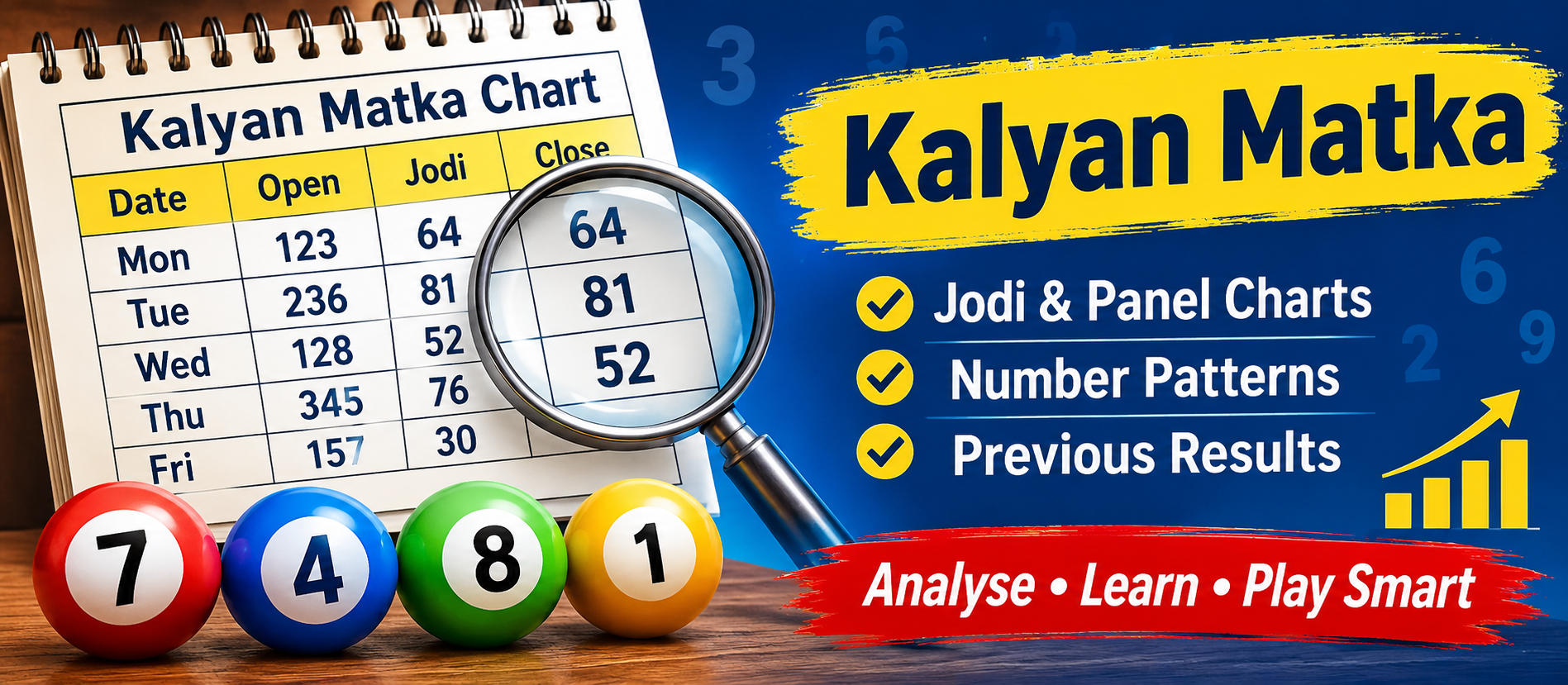
On this page
- What Is Guessing Kalyan?
- Understanding Kalyan Matka and Its Traditional Number System
- 1. Single Ank
- 2. Jodi
- 3. Patti or Panel
- 4. Open and Close
- What Is a Kalyan Guessing Chart?
- Kalyan Matka Chart: Understanding Jodi and Panel Records
- Understanding the Kalyan Jodi Chart
- Understanding the Kalyan Panel Chart
- Jodi Chart vs Panel Chart
- How to Read Kalyan Previous Results
- Step 1: Identify the Correct Market
- Step 2: Check the Result Date
- Step 3: Understand the Result Format
- Step 4: Check Historical Record Consistency
- Step 5: Distinguish Historical Information from Predictions
- Kalyan Result Analysis: Understanding Historical Number Patterns
- 1. Repeated Number Records
- 2. Digit Distribution
- 3. Historical Frequency
- 4. Missing and Incomplete Records
- 5. Why Number Patterns Cannot Guarantee Future Results
- What Is the Difference Between Kalyan Day and Kalyan Night?
- Kalyan
- Kalyan Night
- Why Keeping the Records Separate Matters
- Common Mistakes People Make When Understanding Kalyan Guessing
- Believing Every Guessing Formula
- Confusing Different Market Charts
- Depending on Unverified Historical Records
- Trusting Guaranteed Number Claims
- Ignoring Financial and Legal Risks
- Where to Find Kalyan Results and Historical Charts?
- Legal Awareness and Responsible Information
- Final Thoughts
- Frequently Asked Questions About Guessing Kalyan
- 1. What is Guessing Kalyan?
- 2. What is a Kalyan guessing chart?
- 3. What is the difference between a Kalyan Jodi chart and a Panel chart?
- 4. How can I understand Kalyan's previous results?
- 5. Can Kalyan result analysis predict future numbers?
- 6. What is the Kalyan Matka number chart?
- 7. What is the difference between Kalyan and Kalyan Night?
- 8. What do Open and Close mean in Kalyan results?
- 9. Are Kalyan guessing numbers guaranteed?
- 10. Where can I learn more about Kalyan Matka?
When people search for Guessing Kalyan, they often want to understand how Kalyan Matka charts are organised, what previous results represent, and how different numerical combinations appear in historical records. For many Indian readers, terms such as Kalyan guessing, Jodi, Patti, Open, Close, and Kalyan Matka chart are familiar, but understanding how they relate to one another is not always straightforward.
Kalyan is one of the widely recognised names in the traditional Satta Matka landscape. Over time, its terminology and numerical records have become common subjects of online searches. People looking for Kalyan previous results may also want to understand the difference between a Jodi chart and a Panel chart, how an individual result is displayed, and how historical information is organised.
This guide explains the basics of Guessing Kalyan, the structure of Kalyan charts, common number-related terminology, and the importance of accurate historical records. It also separates factual number analysis from unsupported claims about guaranteed predictions.
Whether you are researching Kalyan Matka history, learning how to read a traditional chart, or simply trying to understand the terminology used on Indian result websites, this article will help you understand the subject more clearly.
What Is Guessing Kalyan?
Guessing Kalyan is a commonly searched phrase associated with the study and discussion of Kalyan Matka numbers, historical results, and numerical combinations.
The term generally refers to opinions or speculative interpretations based on previously recorded results. People searching for Kalyan guessing often come across different types of information, including:
- Previous Kalyan market results.
- Historical Jodi records.
- Open and Close number formats.
- Three-digit Panel or Patti records.
- Weekly and monthly Kalyan charts.
- Traditional Matka number terminology.
In online discussions, Kalyan matka guessing is sometimes associated with attempts to identify numerical patterns from historical records. However, it is important to understand that these patterns do not establish what a future result will be.
A historical chart documents what has already happened. It does not provide a verified formula for determining a future outcome.
For beginners, understanding the underlying number system and chart structure is more useful than relying on unsupported claims about fixed numbers or guaranteed results.
Understanding Kalyan Matka and Its Traditional Number System
Before exploring a Kalyan guessing chart, it is helpful to understand the basic terminology associated with Kalyan Matka.
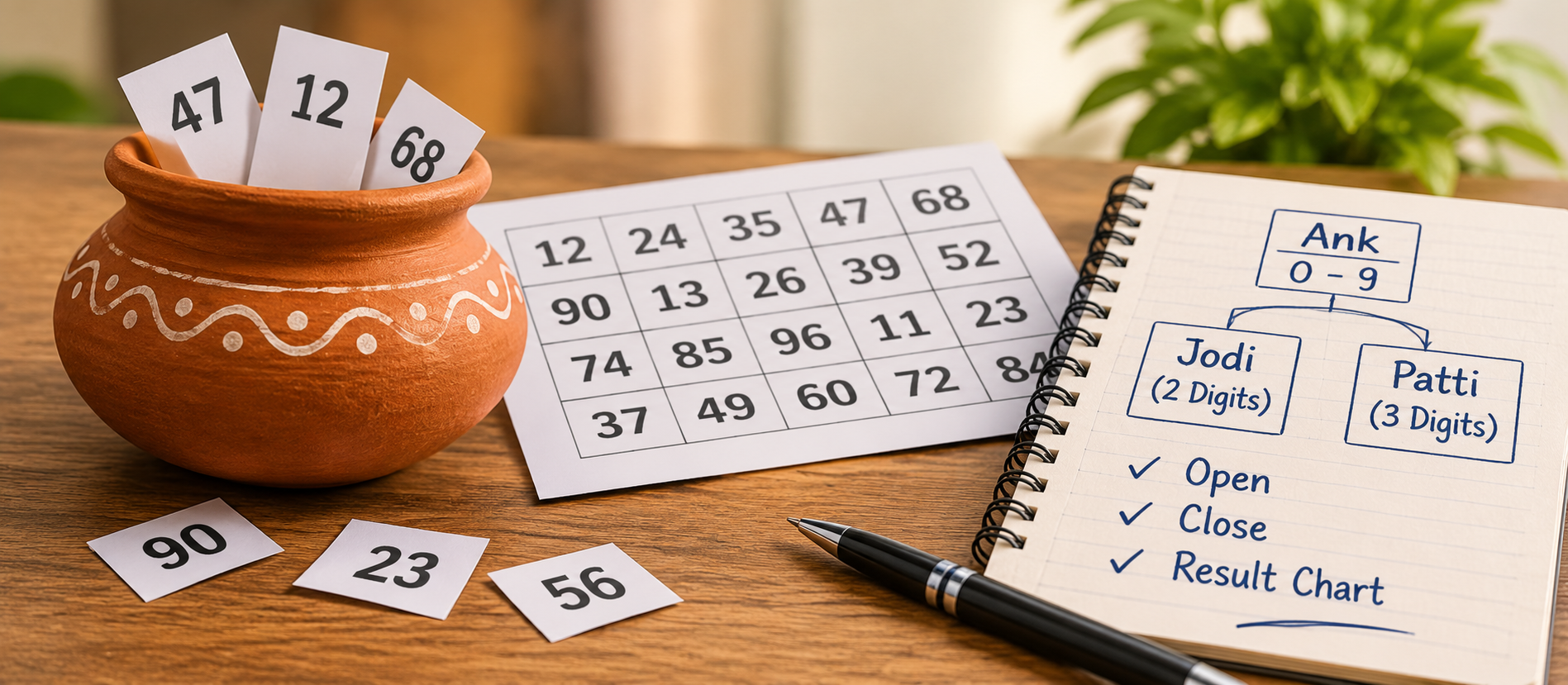
The traditional Matka format uses different numerical representations. These are commonly organised into single digits, two-digit combinations, and three-digit combinations.
Some of the most frequently encountered terms include:
1. Single Ank
A Single Ank refers to an individual digit from 0 to 9.
It is one of the simplest numerical formats found in traditional Matka terminology. Historical records may display a single digit as part of a larger result combination.
For example, 3, 5, and 8 are individual digits.
2. Jodi
A Jodi is a two-digit numerical combination.
Examples include:
- 24
- 37
- 56
- 81
- 90
Jodi records are commonly presented in separate charts so that historical two-digit entries can be reviewed by date.
A Kalyan Jodi chart is therefore useful for understanding how previous two-digit results have been recorded.
3. Patti or Panel
Patti, also known as Panel, refers to a three-digit numerical combination.
Examples include:
- 123
- 145
- 268
- 347
- 579
Traditional Matka terminology also classifies Patti combinations into different categories.
Single Patti: A three-digit combination containing three different digits.
Double Patti: A three-digit combination containing a repeated digit.
Triple Patti: A three-digit combination containing three identical digits.
These classifications describe the structure of the numerical entry. They should not be confused with predictions or indicators of future outcomes.
4. Open and Close
Open and Close are two commonly used terms in traditional Kalyan result formats.
The Open portion represents the first part of a recorded result, while Close represents the second part.
Depending on the format, historical records may show the associated Panel and single-digit information alongside the final two-digit Jodi.
Understanding these terms makes it easier to read a complete Kalyan result rather than looking at individual numbers without context.
What Is a Kalyan Guessing Chart?
A Kalyan guessing chart is a term commonly used in online searches for numerical records, historical combinations, and discussions related to Kalyan Matka.
A chart generally organises previously published information by date, week, or month. Depending on the website, it may contain Jodi records, Panel records, Open and Close details, or other reference information.
For example, a simplified historical record might look like this:
Day | Open Panel | Jodi | Close Panel |
|---|---|---|---|
Monday | 123 | 64 | 145 |
Tuesday | 236 | 81 | 347 |
Wednesday | 128 | 52 | 169 |
Thursday | 345 | 76 | 128 |
Friday | 157 | 30 | 246 |
Note: These are fictional examples used only to demonstrate chart formatting. They are not actual Kalyan results or predictions.
A properly organised chart helps readers understand how numerical information is presented.
When examining a chart, it is important to pay attention to:
- The market name.
- The date associated with each result.
- Whether the entry represents Open or Close.
- Whether the chart displays Jodi or Panel information.
- Whether historical entries have been corrected or updated.
This is particularly important because different websites may use different chart layouts.
Kalyan Matka Chart: Understanding Jodi and Panel Records
A Kalyan Matka chart can contain several types of numerical information. Two commonly referenced formats are Jodi charts and Panel charts.
Although they are related, they serve different purposes when documenting historical results.
Understanding the Kalyan Jodi Chart
A Jodi chart displays two-digit combinations in an organised format.
For example, a historical chart may contain entries such as 12, 35, 48, 67 and 90.
Readers can use the chart to locate a particular date and understand which Jodi was recorded for that date.
A well-maintained Jodi chart should make it easy to:
- Find historical entries.
- Check records for a particular day.
- Review weekly and monthly information.
- Identify missing or duplicate entries.
- Compare the same market across different periods.
The main purpose of a Jodi chart is historical reference, not future number prediction.
Understanding the Kalyan Panel Chart
A Panel chart contains three-digit numerical combinations associated with historical result records.
Compared with a Jodi chart, it provides more detail about the underlying numerical format.
For example, a Panel chart may display entries such as 123, 245, 367, and 489.
Depending on the chart format, the Open Panel and Close Panel may appear alongside the corresponding Jodi.
A Panel chart can help readers understand the relationship between different numerical entries within a traditional Matka result.
It is also useful for learning the difference between Single Patti, Double Patti, and Triple Patti classifications.
Jodi Chart vs Panel Chart
Feature | Jodi Chart | Panel Chart |
|---|---|---|
Number format | Two digits | Three digits |
Common terminology | Jodi | Patti or Panel |
Main information | Two-digit records | Three-digit records |
Organisation | Date-wise or week-wise | Date-wise or week-wise |
Main purpose | Historical reference | Historical reference |
Both formats help organise previously published information, but neither can establish the outcome of a future draw.
How to Read Kalyan Previous Results
Kalyan previous results are historical records associated with a particular market and date.
For someone unfamiliar with the chart layout, understanding these records can initially seem confusing. However, a few basic checks make the process easier.
Step 1: Identify the Correct Market
Always check the market name before interpreting a numerical entry.
Kalyan and Kalyan Night are separate market categories on many result websites. Their records should not be mixed.
Step 2: Check the Result Date
The date is an important part of every historical record.
A number without its corresponding date provides incomplete information. When reviewing previous results, always confirm the day, month, and year.
Step 3: Understand the Result Format
Determine whether the chart is displaying:
- A Single Ank.
- A two-digit Jodi.
- A three-digit Panel.
- Open and Close information.
This avoids confusion when comparing entries from different chart types.
Step 4: Check Historical Record Consistency
Different online sources may display different information for the same historical date.
Possible reasons include:
- Data-entry mistakes.
- Delayed updates.
- Incorrect market selection.
- Changes made after an initial publication.
- Incomplete historical archives.
If a particular entry appears inconsistent, it should be checked against another available record rather than automatically accepted.
Step 5: Distinguish Historical Information from Predictions
This is one of the most important points when reviewing Kalyan's previous results.
A number appearing several times in a historical chart does not mean it is more likely to appear again.
Similarly, a number that has not appeared recently is not automatically due.
Historical information should be treated as documentation of previous outcomes, not as a dependable method for forecasting future numbers.
Kalyan Result Analysis: Understanding Historical Number Patterns
Kalyan result analysis generally refers to examining previously published numerical records and understanding how they are organised.
There are several ways to describe historical number patterns. However, it is important to distinguish mathematical observations from claims about predictive accuracy.
1. Repeated Number Records
A historical chart may contain the same digit or Jodi more than once.
For example, a Jodi might appear in multiple entries across a monthly archive.
This is a normal feature of numerical records. Its recurrence does not establish that it will appear again.
2. Digit Distribution
Digit distribution refers to how frequently different digits appear within a selected historical dataset.
For example, a researcher may count the number of times each digit from 0 to 9 occurs in a collection of historical entries.
This can help describe the dataset and identify its numerical composition.
However, a higher historical frequency does not prove that a digit has a higher probability in a future independent outcome.
3. Historical Frequency
Frequency analysis involves counting how many times a particular numerical entry appears within a defined period.
For example, someone studying a 30-day historical chart may count how often a particular Jodi appears.
The period matters because results can differ when examining a weekly, monthly, or yearly archive.
For meaningful historical analysis, the dataset should be complete, dated, and limited to the correct market.
4. Missing and Incomplete Records
Not every online chart contains a complete historical dataset.
Some websites may have missing dates, incorrect entries, or incomplete archives.
Before drawing conclusions from a chart, it is important to establish whether the information is sufficiently complete.
5. Why Number Patterns Cannot Guarantee Future Results
One common misunderstanding in Kalyan guessing discussions is the belief that historical patterns can reveal a future number.
This is not scientifically established.
If outcomes are generated independently and randomly, previous results do not determine the next outcome. A number appearing frequently in the past is not automatically more likely to appear again.
This is why claims such as fixed Kalyan numbers, guaranteed Jodi, and 100% accurate guessing should be treated with caution.
What Is the Difference Between Kalyan Day and Kalyan Night?
Kalyan and Kalyan Night are commonly listed as separate market categories on Satta Matka-related result websites.
Although their terminology and numerical formats may look similar, their market schedules and historical records are presented separately.
Kalyan
Kalyan is one of the established names in the traditional Matka market landscape.
Readers searching for Kalyan results may encounter Open and Close information, Jodi records and Panel charts.
Kalyan Night
Kalyan Night is a separate market category generally associated with night-time result listings.
Its historical records should be reviewed independently from the regular Kalyan market.
Why Keeping the Records Separate Matters
Combining information from two different market categories can lead to incorrect historical comparisons.
When reviewing any chart, make sure that:
- The market name is correct.
- The result date is accurate.
- The relevant chart belongs to the selected market.
- Open and Close records are not mixed with unrelated entries.
This basic distinction helps maintain the accuracy of historical information.
Common Mistakes People Make When Understanding Kalyan Guessing
People researching Satta Kalyan guessing often encounter misleading information online. Some websites publish numerical claims without explaining their sources or limitations.
Here are a few common mistakes worth avoiding.
Believing Every Guessing Formula
There are numerous online claims about mathematical formulas, number combinations, and special guessing techniques.
However, no publicly verified formula can guarantee a future Kalyan result.
A numerical calculation can describe historical information, but it cannot establish a guaranteed future outcome.
Confusing Different Market Charts
Kalyan, Kalyan Night, Milan, and Rajdhani are different market categories.
Their records should not be treated as interchangeable.
Always check the market name before interpreting historical information.
Depending on Unverified Historical Records
An online chart is only as useful as the accuracy of its underlying data.
If a website does not explain how its records are maintained, corrected, or updated, readers should be cautious about treating those records as authoritative.
Trusting Guaranteed Number Claims
Promises of guaranteed results, fixed Jodis, or 100% accurate numbers are not supported by reliable evidence.
Be especially careful with websites or individuals asking for payments in exchange for guaranteed numerical predictions.
Ignoring Financial and Legal Risks
Satta Matka is associated with gambling and can involve financial losses.
Readers should understand the legal position applicable to their location and avoid treating gambling-related claims as an income opportunity.
Where to Find Kalyan Results and Historical Charts?
Readers researching Kalyan Matka often need more than a single result. They may also want to understand how historical information is organised across different chart formats.
SattaResult.org brings together market-related result information, historical charts, and educational guides in an organised format.
The website includes different sections covering:
- Market-wise result information.
- Kalyan result listings.
- Jodi charts.
- Panel charts.
- Historical numerical reference tables.
- Guides explaining traditional Matka terminology.
Readers can explore the relevant sections to understand the structure of published records and learn more about the terminology associated with different markets.
For someone new to the subject, starting with a basic explanation of the Matka number system can make the chart sections easier to understand.
You can also read our guide on What is Kalyan Matka to learn more about its background, traditional terminology, number formats, and historical context.
Legal Awareness and Responsible Information
Understanding the legal position is essential when researching gambling-related topics in India.
Betting and gambling have historically involved state-level legal frameworks. In addition, the Promotion and Regulation of Online Gaming Act, 2025 establishes a national framework prohibiting online money games and related activities within its scope.
The Promotion and Regulation of Online Gaming Rules, 2026 came into force on 1 May 2026. The Ministry of Electronics and Information Technology explains that the framework considers factors such as stakes, expectations of monetary winnings, and the structure of a game's revenue model when determining whether an online game falls within the prohibited category.
The application of the law depends on the nature of the activity and the relevant legal provisions. Readers should consult the applicable laws and official government notifications rather than assume that a particular activity is permitted.
Useful official reference:
It is also important to remember that gambling can lead to financial difficulties. No historical chart, numerical formula, or guessing claim should be treated as a guaranteed source of income.
Final Thoughts
Guessing Kalyan is a widely searched topic among people interested in Kalyan Matka terminology, historical results, and numerical charts.
However, understanding the subject requires more than simply looking at a list of numbers. Readers should know the difference between Jodi and Panel records, understand Open and Close terminology, and recognise how historical results are organised.
A properly maintained Kalyan number chart can provide useful historical context. It can help readers locate previous entries, understand traditional number classifications, and examine the structure of numerical records.
At the same time, historical frequency and repeated number patterns should never be confused with reliable predictions.
The most useful approach is to focus on accurate information, understand the terminology, and remain aware of the financial and legal considerations surrounding gambling-related activities.
SattaResult.org aims to make market information, historical records, and educational resources easier to understand through clear explanations and organised reference material.
Frequently Asked Questions About Guessing Kalyan
1. What is Guessing Kalyan?
Guessing Kalyan is a commonly searched term associated with Kalyan Matka numerical discussions, historical result charts, Jodi records, and Panel information. It generally refers to speculative interpretations of numerical information rather than verified predictions.
2. What is a Kalyan guessing chart?
A Kalyan guessing chart is a commonly used term for charts and numerical records associated with Kalyan. These may contain historical Jodi, Panel, Open, and Close information organised by date or week.
3. What is the difference between a Kalyan Jodi chart and a Panel chart?
A Jodi chart displays two-digit numerical combinations, whereas a Panel chart displays three-digit combinations. Both are used to organise historical result information.
4. How can I understand Kalyan's previous results?
Start by identifying the correct market, checking the result date, and understanding whether the entry represents a Jodi, Panel, Open, or Close value. Also verify that the historical information is complete and accurately recorded.
5. Can Kalyan result analysis predict future numbers?
No. Historical analysis can describe previously recorded results, but there is no scientifically verified method that guarantees future Kalyan outcomes.
6. What is the Kalyan Matka number chart?
A Kalyan Matka number chart is an organised presentation of historical numerical records. Depending on its format, it may contain Jodi combinations, Panel entries, and other traditional number classifications.
7. What is the difference between Kalyan and Kalyan Night?
They are separate market categories commonly presented with different result schedules and historical records. Their charts should be examined independently.
8. What do Open and Close mean in Kalyan results?
Open and Close refer to two parts of a traditional Matka result format. Historical records may display their associated numerical combinations alongside the final Jodi.
9. Are Kalyan guessing numbers guaranteed?
No. Claims about guaranteed numbers, fixed Jodis, or 100% accurate predictions are not supported by reliable evidence. Previous outcomes cannot establish future results.
10. Where can I learn more about Kalyan Matka?
You can read educational guides explaining its history, traditional terminology, numerical formats, and historical charts. SattaResult.org provides informational resources covering these subjects.