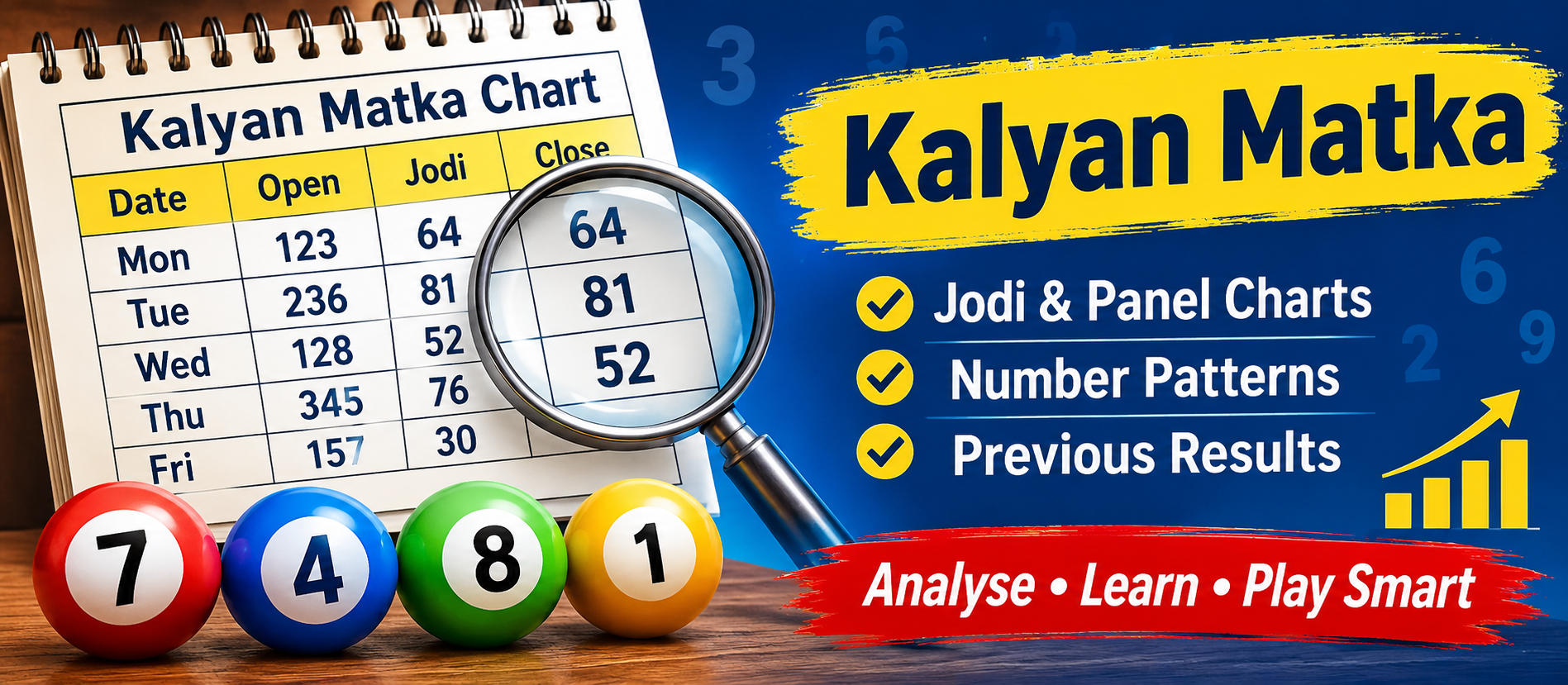
How to Play Satta Matka: A Beginner's Guide to Rules, Numbers, Jodi and Results
Satta Matka is a traditional number-based gambling activity in India, known for its numerical combinations, Jodi, Patti and historical result charts. For beginners, understanding terms like Ank, Open, Close, and Panel can be confusing. This guide explains the traditional Satta Matka number system, common terminology and result formats in simple language, helping readers understand how historical charts are organised while highlighting the associated risks and legal considerations.
By SattaResult · Published 16 Nov 2026, 7:01 pm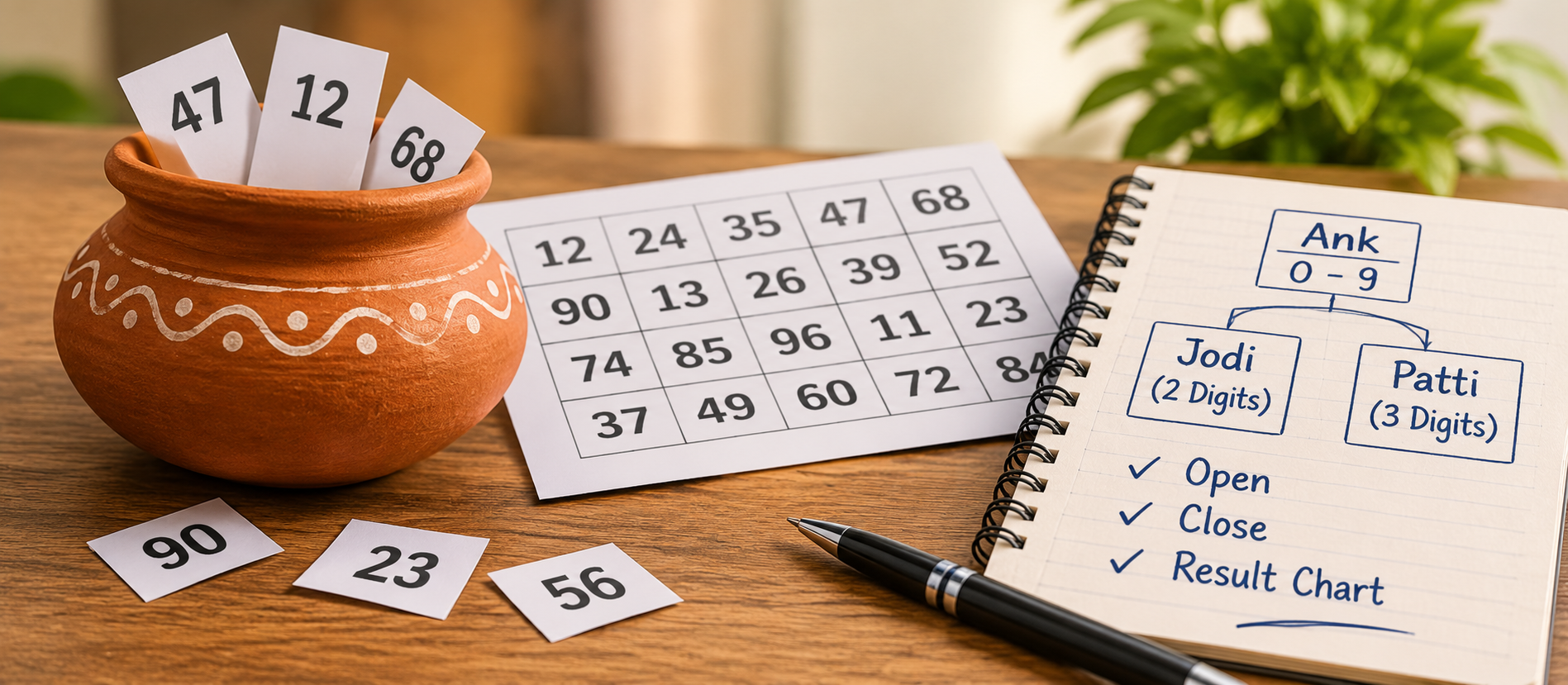
On this page
- What Is Satta Matka?
- How Does the Traditional Satta Matka Number System Work?
- 1. Single Ank
- 2. Jodi
- 3. Patti or Panel
- What Do Open and Close Mean in Satta Matka?
- Understanding Open
- Understanding Close
- Understanding the Relationship Between Open, Close and Jodi
- How to Read a Satta Matka Chart
- Step 1: Identify the Market Name
- Step 2: Understand the Date Format
- Step 3: Identify the Numerical Format
- Step 4: Check Historical Entries
- Step 5: Understand the Purpose of the Chart
- What Are the Different Types of Satta Matka Charts?
- 1. Jodi Chart
- 2. Patti Chart
- 3. Panel Chart
- 4. Historical Result Chart
- What Are the Different Satta Matka Markets?
- Understanding Satta Matka Results and Historical Records
- Can Satta Matka Number Patterns Predict Future Results?
- Common Satta Matka Terms Every Beginner Should Know
- Is Satta Matka Legal in India?
- Financial Risks and Responsible Awareness
- Final Thoughts
- Frequently Asked Questions About Satta Matka
- 1. What is Satta Matka?
- 2. How does the Satta Matka number system work?
- 3. What is a Jodi in Satta Matka?
- 4. What is Patti in Satta Matka?
- 5. What is the difference between Open and Close?
- 6. What is a Satta Matka chart?
- 7. What are the different Satta Matka markets?
- 8. Can previous Satta Matka results predict future numbers?
- 9. Is Satta Matka legal in India?
- 10. Where can beginners learn Satta Matka terminology?
Satta Matka is a term many Indian internet users encounter when searching for traditional Matka terminology, number charts, and historical results. Beginners often come across words such as Jodi, Patti, Ank, Open, Close, and Panel without knowing what they mean or how they relate to one another.
Understanding these terms can be confusing, particularly when different websites display numerical information in different formats. Some focus on historical charts, while others explain market names, result records, and traditional number combinations.
This guide introduces the Satta Matka number system, explains its commonly used terminology, and shows how to understand historical result charts. It is designed for readers who want to learn about the subject without confusing historical information with reliable predictions or guaranteed outcomes.
We will also cover the financial risks and legal considerations that Indian readers should understand before engaging with any gambling-related activity.
What Is Satta Matka?
Satta Matka is a traditional form of number-based gambling that developed in India and became particularly associated with Mumbai's historical betting culture.
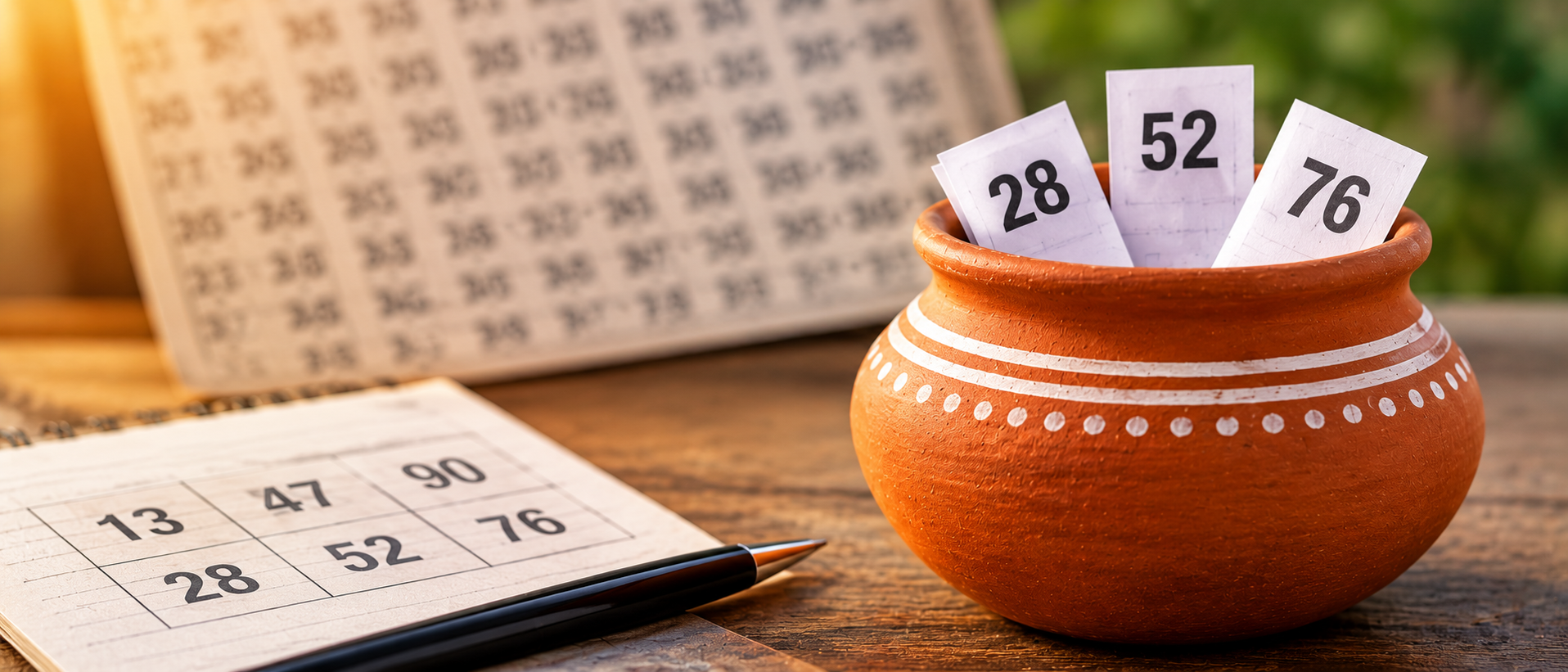
The word Matka originally referred to an earthen pot. In the earlier form of the activity, numbered slips were placed inside a pot and a number was drawn. Over time, the format evolved and became associated with numerical combinations, result charts, and different market names.
Today, the term Satta Matka is widely used in online searches related to historical results, Jodi charts, Panel charts, and traditional number terminology.
People researching Satta Matka may encounter several related terms:
- Ank: An individual numerical digit.
- Jodi: A two-digit numerical combination.
- Patti or Panel: A three-digit numerical combination.
- Open: The first part of a traditional result format.
- Close: The second part of a traditional result format.
- Chart: An organised record of previously published results.
Understanding these basic terms makes it easier to interpret historical Matka information.
How Does the Traditional Satta Matka Number System Work?
The traditional Satta Matka number system uses different numerical formats to organise results. These formats are often presented separately in online charts.
For beginners, it is useful to understand the difference between an individual digit, a two-digit combination, and a three-digit combination.
1. Single Ank
An Ank refers to an individual digit between 0 and 9.
For example:
0, 1, 2, 3, 4, 5, 6, 7, 8, and 9.
These digits are the basic elements used in traditional Matka numerical terminology.
A single digit may appear in a historical record as part of a larger result combination.
2. Jodi
Jodi refers to a combination of two digits.
Examples include:
- 12
- 24
- 35
- 47
- 68
- 90
A Jodi is commonly displayed in a separate two-digit chart. These charts are generally organised by market and date, making it easier to locate historical entries.
For example, someone researching previous results may look at a Jodi chart to understand how two-digit combinations are displayed over a particular period.
3. Patti or Panel
Patti, also known as Panel, refers to a three-digit numerical combination.
Examples include:
- 123
- 145
- 267
- 348
- 579
Traditional terminology also divides Patti combinations into three broad categories.
Single Patti: A three-digit combination containing three different digits, such as 123.
Double Patti: A three-digit combination containing two identical digits, such as 112.
Triple Patti: A three-digit combination containing three identical digits, such as 777.
These categories describe the structure of the numerical combinations. They do not indicate that a particular combination is more likely to appear in a future result.
What Do Open and Close Mean in Satta Matka?
Open and Close are two important terms in traditional Satta Matka result terminology.
They represent different parts of a result format and are commonly displayed in historical result charts.
Understanding Open
Open refers to the first part of a traditional result entry.
Depending on the chart format, the Open section may display a three-digit Panel and an associated single-digit Ank.
Understanding Close
Close refers to the second part of the traditional result format.
It is generally displayed alongside the corresponding Close Panel and the final Jodi information.
Understanding the Relationship Between Open, Close and Jodi
In traditional result formatting, the Open and Close sections are associated with individual numerical entries, while the Jodi represents a two-digit combination.
A simplified example of a historical record might look like this:
Result component | Illustrative value |
|---|---|
Open Panel | 123 |
Open Ank | 6 |
Close Panel | 145 |
Close Ank | 0 |
Jodi | 60 |
Note: This is a fictional example to explain terminology. It is not an actual result or a prediction.
Understanding the relationship between these terms makes it easier to read a traditional Matka chart.
How to Read a Satta Matka Chart
A Satta Matka chart is an organised presentation of historical numerical records. Depending on the website, it may contain daily, weekly, or monthly information.
For beginners, a chart can initially look complicated because it may contain several numerical columns and market names.
However, understanding its basic structure makes the information easier to follow.
Step 1: Identify the Market Name
Always identify the market associated with a chart before interpreting its entries.
Different market names have separate historical records. Mixing information from different markets can lead to incorrect comparisons.
Step 2: Understand the Date Format
Most historical charts organise information by date or day.
Check the date carefully before interpreting a numerical entry. A result without an accurate date is incomplete historical information.
Step 3: Identify the Numerical Format
Check whether the chart displays:
- Single Ank information.
- Two-digit Jodi combinations.
- Three-digit Patti or Panel combinations.
- Open and Close details.
Different chart types organise these values differently.
Step 4: Check Historical Entries
Look for missing dates, duplicate entries, and inconsistent numerical records.
If two sources display different information for the same date, verify the original records before treating either entry as accurate.
Step 5: Understand the Purpose of the Chart
A historical chart helps readers understand previously recorded numerical information.
It should not be treated as a reliable prediction tool. Previous outcomes do not establish what a future result will be.
What Are the Different Types of Satta Matka Charts?
Different chart formats are used to organise historical Matka information.
Understanding their differences helps beginners identify the type of information they are viewing.
1. Jodi Chart
A Jodi chart displays historical two-digit combinations.
It generally includes date-wise entries and may cover a selected market over a particular period.
2. Patti Chart
A Patti chart displays three-digit numerical combinations.
It is useful for understanding how Single, Double, and Triple Patti entries are represented in traditional Matka terminology.
3. Panel Chart
A Panel chart is another commonly used term for a chart containing three-digit numerical records.
Depending on the website, Panel information may be organised alongside Open and Close entries.
4. Historical Result Chart
A historical result chart presents previously published results in chronological order.
Readers may use these records to understand the history of a particular market and locate information for specific dates.
What Are the Different Satta Matka Markets?
Satta Matka-related websites commonly organise information under different market names.
Some names that readers may encounter include:
- Kalyan
- Kalyan Night
- Milan Day
- Milan Night
- Rajdhani Day
- Rajdhani Night
- Main Mumbai
These names are commonly used to distinguish different market categories and their historical records.
However, market names and chart formats may vary between websites.
It is important not to assume that numerical records from one market apply to another.
For readers who want to understand a specific market, our guide on What is Kalyan Matka explains the terminology and historical context associated with Kalyan.
Understanding Satta Matka Results and Historical Records
Satta Matka results are commonly presented as numerical entries associated with particular market names and dates.
People searching for historical results may want to understand how records are organised and how different numerical formats are displayed.
When reviewing historical information, consider the following points:
Market accuracy: Confirm that the record belongs to the correct market.
Date accuracy: Make sure the date matches the historical entry.
Result format: Understand whether the displayed number represents a Jodi, Ank, or Panel.
Record consistency: Check whether the website maintains complete and updated historical information.
Source reliability: Avoid assuming that every number published online is accurate.
A properly organised historical chart can be useful for reference and understanding traditional terminology. However, it cannot guarantee or reliably establish future outcomes.
Can Satta Matka Number Patterns Predict Future Results?
This is one of the most common questions among people researching Satta Matka.
Some online discussions focus on repeated digits, historical Jodis, and numerical frequency. These observations may describe previous records, but they should not be confused with a scientifically reliable prediction method.
For example, suppose a particular Jodi appears several times in a historical chart.
That observation only tells us that the combination appeared in the recorded dataset. It does not establish that the same Jodi is more likely to appear in the future.
Similarly, a number that has not appeared for several days is not automatically due.
There is no verified mathematical formula that guarantees a winning Satta Matka number.
Be cautious of websites or individuals promising:
- 100% accurate numbers.
- Guaranteed winning Jodis.
- Fixed Patti combinations.
- Secret number formulas.
- Guaranteed daily income through Matka.
Such claims can create unrealistic expectations and expose people to financial losses.
Common Satta Matka Terms Every Beginner Should Know
Before exploring historical Matka charts, it helps to understand the terminology commonly used on result websites.
Term | Meaning |
|---|---|
Satta Matka | Traditional number-based gambling activity |
Ank | Individual digit from 0 to 9 |
Jodi | Two-digit combination |
Patti | Three-digit combination |
Panel | Another term for a three-digit combination |
Single Patti | Three different digits |
Double Patti | One digit repeated twice |
Triple Patti | Three identical digits |
Open | First part of the traditional result format |
Close | Second part of the traditional result format |
Chart | Organised numerical record |
Previous Result | A historical result entry |
Market | A named category of Matka results |
Knowing these terms makes it easier to understand the language used in Satta Matka-related articles and historical chart pages.
Is Satta Matka Legal in India?
Understanding the legal position is particularly important for Indian readers.
Gambling laws in India have historically involved different central and state-level provisions. The legal position of traditional gambling activities and online gambling services should not be assumed to be identical.
A major development is the Promotion and Regulation of Online Gaming Act, 2025, which establishes a national framework prohibiting online money games and related activities within its scope.
The Act addresses activities involving online money games, including their offering, facilitation, promotion, and participation. It also contains provisions concerning advertisements and financial transactions associated with such services.
The Promotion and Regulation of Online Gaming Rules, 2026 came into force on 1 May 2026, providing an operational framework for implementing the Act.
For anyone researching Satta Matka online, this legal framework is especially important. An online service involving stakes and expected monetary winnings may fall within the prohibited online money game framework, depending on the facts and applicable legal definitions.
Readers should not assume that an activity is legal simply because a website publishes its results or numerical charts.
For accurate information, refer to these official government resources:
This article is intended for educational and informational purposes. It does not encourage participation in gambling or provide instructions for placing bets.
Financial Risks and Responsible Awareness
Satta Matka and similar gambling-related activities can involve substantial financial risks.
One common misconception is that historical charts or repeated numerical combinations can provide a dependable way to earn money.
In reality, there is no guaranteed income or risk-free method associated with gambling.
People should be particularly careful about:
- Spending money they cannot afford to lose.
- Borrowing money for gambling.
- Trusting guaranteed winning-number claims.
- Sharing personal or banking information with unverified websites.
- Paying individuals who promise secret guessing formulas.
- Ignoring financial responsibilities because of gambling-related expectations.
If gambling begins to affect personal finances, relationships, or everyday responsibilities, seeking support is important.
Understanding these risks is just as important as understanding the terminology.
Final Thoughts
Learning about Satta Matka begins with understanding its traditional number system, terminology, and historical chart formats.
For beginners, terms such as Ank, Jodi, Patti, Panel, Open and Close may initially seem complicated. However, once their meanings are clear, it becomes easier to understand how historical Matka records are organised.
A well-structured Satta Matka chart can provide useful historical information, while separate Jodi and Panel charts help readers understand different numerical formats.
At the same time, historical results should not be treated as predictions, and claims about guaranteed numbers or fixed winning formulas should always be approached with caution.
The legal and financial risks also deserve serious attention, particularly as India has introduced a national framework prohibiting online money games within its scope.
The best way to approach this subject is through accurate information, a clear understanding of traditional terminology, and awareness of the risks involved.
Frequently Asked Questions About Satta Matka
1. What is Satta Matka?
Satta Matka is a traditional Indian number-based gambling activity that evolved from an earlier system involving the drawing of numbered slips from a pot. Today, the term is commonly associated with numerical combinations, market names, and historical result charts.
2. How does the Satta Matka number system work?
The traditional number terminology includes individual digits called Ank, two-digit combinations called Jodi, and three-digit combinations known as Patti or Panel. Open and Close are also used to describe parts of the traditional result format.
3. What is a Jodi in Satta Matka?
A Jodi is a two-digit numerical combination. Examples include 12, 35, 48, and 90. Historical Jodi charts organise these combinations by date and market.
4. What is Patti in Satta Matka?
Patti refers to a three-digit numerical combination. Traditional classifications include Single Patti, Double Patti, and Triple Patti, depending on the arrangement of digits.
5. What is the difference between Open and Close?
Open and Close refer to the first and second parts of a traditional Matka result format. Their associated numerical entries are commonly displayed in historical charts.
6. What is a Satta Matka chart?
A Satta Matka chart is an organised record of numerical information. Depending on the format, it may contain historical Jodi, Patti, Panel, Open and Close entries.
7. What are the different Satta Matka markets?
Commonly encountered market names include Kalyan, Kalyan Night, Milan Day, Milan Night, Rajdhani Day, and Rajdhani Night. Each may have separate historical records and schedules.
8. Can previous Satta Matka results predict future numbers?
No reliable method can guarantee future results using historical charts. Previous numerical entries describe past outcomes and do not establish what will happen next.
9. Is Satta Matka legal in India?
The legal position depends on the nature of the activity and applicable laws. India's Promotion and Regulation of Online Gaming Act, 2025 prohibits online money games and related activities within its scope. Readers should consult the current legal framework rather than assume that online gambling is permitted.
10. Where can beginners learn Satta Matka terminology?
Beginners can start with educational guides explaining Ank, Jodi, Patti, Panel, Open, and Close. Understanding these terms helps readers interpret historical charts and numerical records more accurately.